
- LoveWell Care Guide
Care Services FAQs
When families start looking into in-home care, the same questions tend to come up: what caregivers can help with, how care is paid for, and how quickly support can begin. These answers can help you prepare for a conversation with LoveWell Care Services about what your loved one needs.

What Kind of Help Can LoveWell Provide?
LoveWell Care Services provides non-medical in-home care, including personal care, companion care, respite for family caregivers, and everyday support for people living with dementia. Caregivers help with the daily tasks that have become hard to manage alone, and the specific tasks and schedule are set for each person.
How Do I Know Which Service Is Right?
Start with the parts of the day that are hardest right now. Help with bathing, dressing, or moving safely usually points to personal care. Loneliness or long hours alone often points to companion care. If a family caregiver needs a break, respite care may be the place to start. Our team can talk through what fits your situation.

Is In-Home Care Medical Care?
No. In-home care is non-medical. Caregivers help with daily activities like bathing, meals, and companionship. Skilled home health care, hospice, and other medical treatment are separate services provided by licensed clinicians.

How Is Care Usually Paid For?
Routine non-medical in-home care is usually paid privately. Some families may be able to use other benefits, but coverage depends on the plan or program and should be confirmed first. For eligible people living with dementia, the Medicare GUIDE program may cover a set number of respite hours.
What Is the GUIDE Program?
GUIDE is a Medicare program that supports people living with dementia and the family members who care for them. Through LoveWell and our partner PocketRN, eligible families can receive up to 76 hours of in-home respite care (up to $2,625), provided by LoveWell caregivers.
To qualify through LoveWell, your loved one must be 65 or older, have Traditional Medicare (not Medicare Advantage or a managed care plan), live at home or in an independent living community, and not be receiving hospice care.
Where Does LoveWell Provide Care?
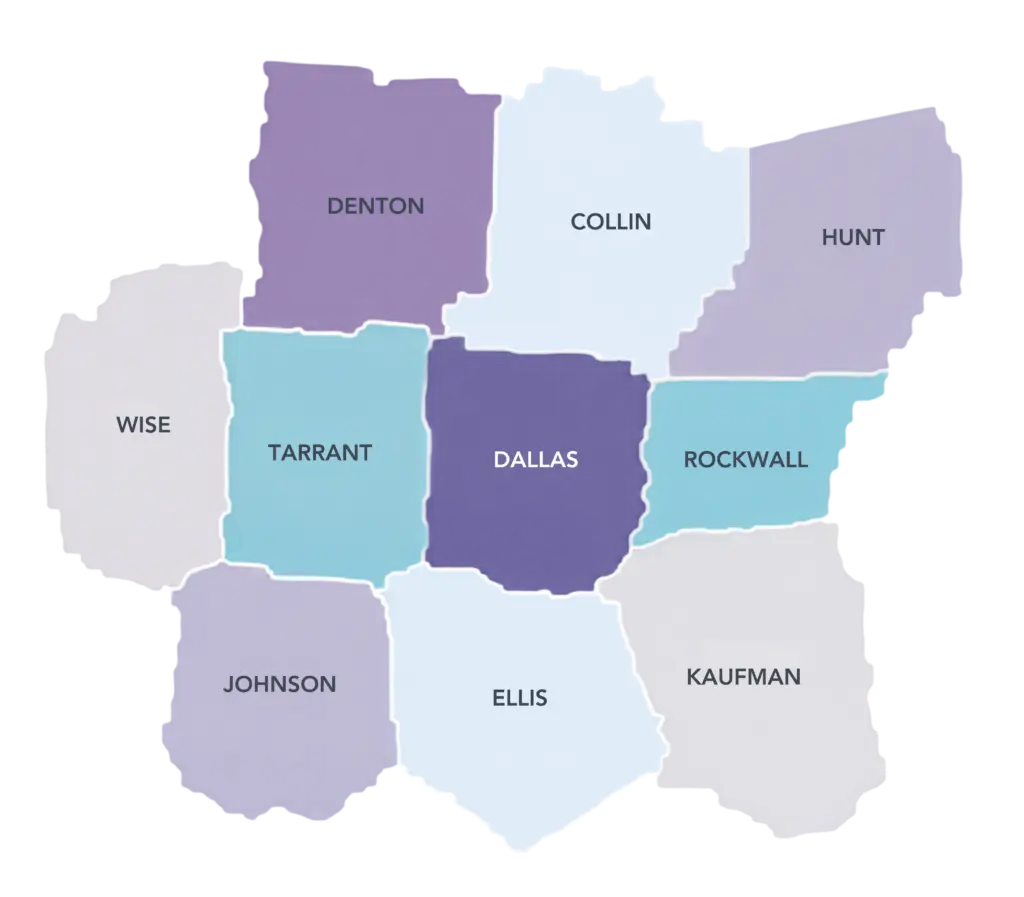
LoveWell Care Services provides in-home care in these North Texas counties:
- Collin
- Dallas
- Denton
- Fannin
- Grayson
- Kaufman
- Rockwall
- Tarrant
What Should I Have Ready Before Contacting LoveWell?
You don’t need every detail figured out. It helps to have a general idea of:
- Where care is needed (home or independent living)
- Which daily activities have become difficult
- What days and times support would help most
- Whether memory loss or dementia is part of the picture
Please call us at (469) 689-4463 rather than sending medical records or Medicare numbers through our website form.
Frequently Asked Questions
Yes. Many families combine services. A care plan can include help with bathing and dressing alongside companionship, meals, and errands.
No. Respite care gives any family caregiver time to rest, work, or handle other responsibilities. GUIDE respite is a separate Medicare benefit that is only for people living with dementia who meet the program’s requirements.
Your loved one must be living with dementia, be 65 or older, have Traditional Medicare, live at home or in an independent living community, and not be receiving hospice care. See the full eligibility details.
No. Through LoveWell, GUIDE requires Traditional Medicare (Parts A and B). Medicare Advantage and other managed care plans are not accepted for this program.
No. Through LoveWell, GUIDE respite is for people who live at home or in an independent living community. Residents of assisted living, memory care, or skilled nursing facilities are not eligible.
Not automatically. Qualifying participants may receive up to 76 hours of in-home respite care (up to $2,625) at no cost to the family, as long as they meet GUIDE eligibility and benefit requirements. Our team can help you check.
Part of the LoveWell Family



You Don't Have to Have Every Answer
You do not have to have every answer before asking for help. LoveWell Care Services can talk with you about everyday support, what your family needs, and possible next steps.
Tell us what kind of help would make daily life easier. We can discuss the next step and available options.